Pre-Ottoman
Zeyrek Mosque (Pantokrator Monastery)
1118–1136 · Fatih / Zeyrek
After Hagia Sophia, the largest surviving Byzantine religious building in Istanbul — a 12th-century Komnenian monastery of two cross-in-square churches joined by a dynastic funerary chapel, with a rare opus sectile floor and early figural stained glass.
- Minarets
- 1
- Built
- 1118–1136
- Architect
- Architect unknown
- Patron
- John II Komnenos & Empress Irene
- District
- Fatih / Zeyrek
History
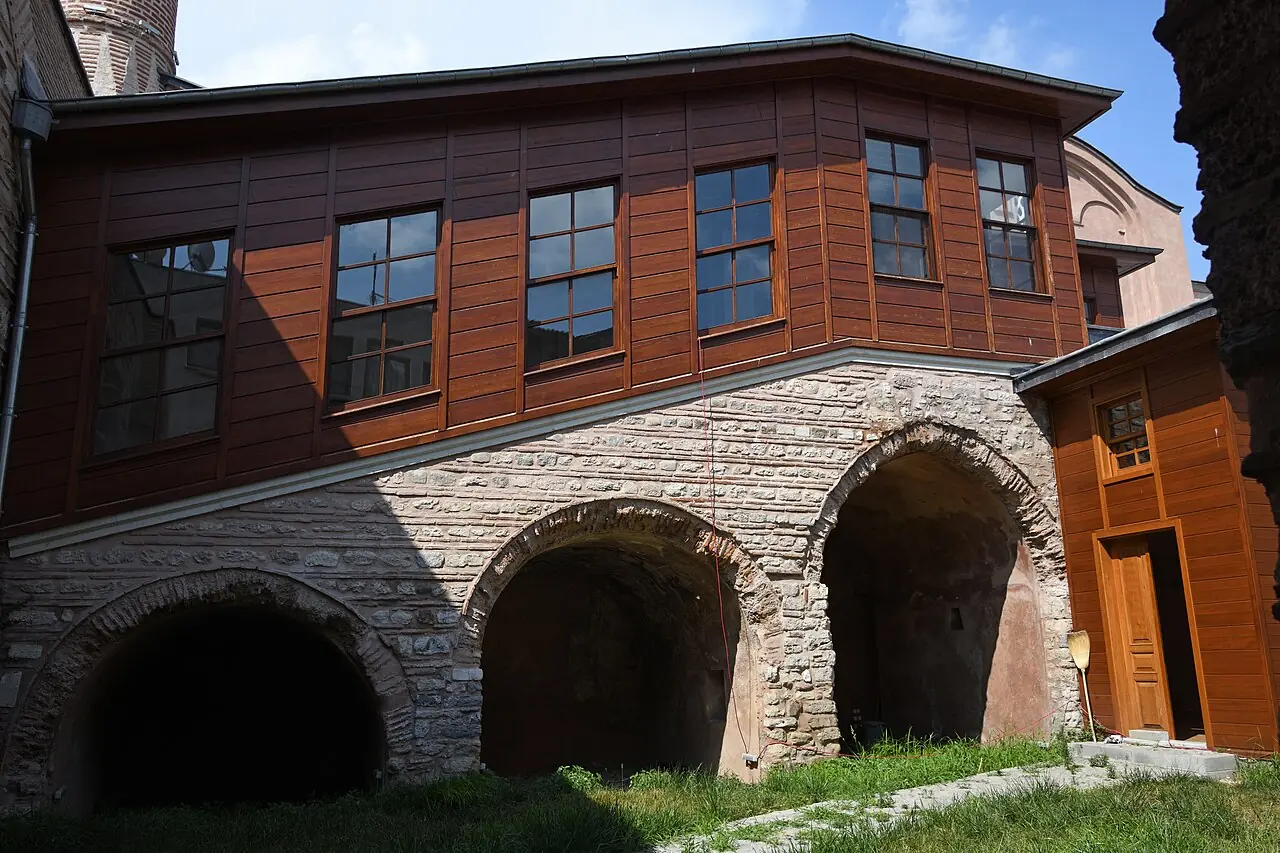
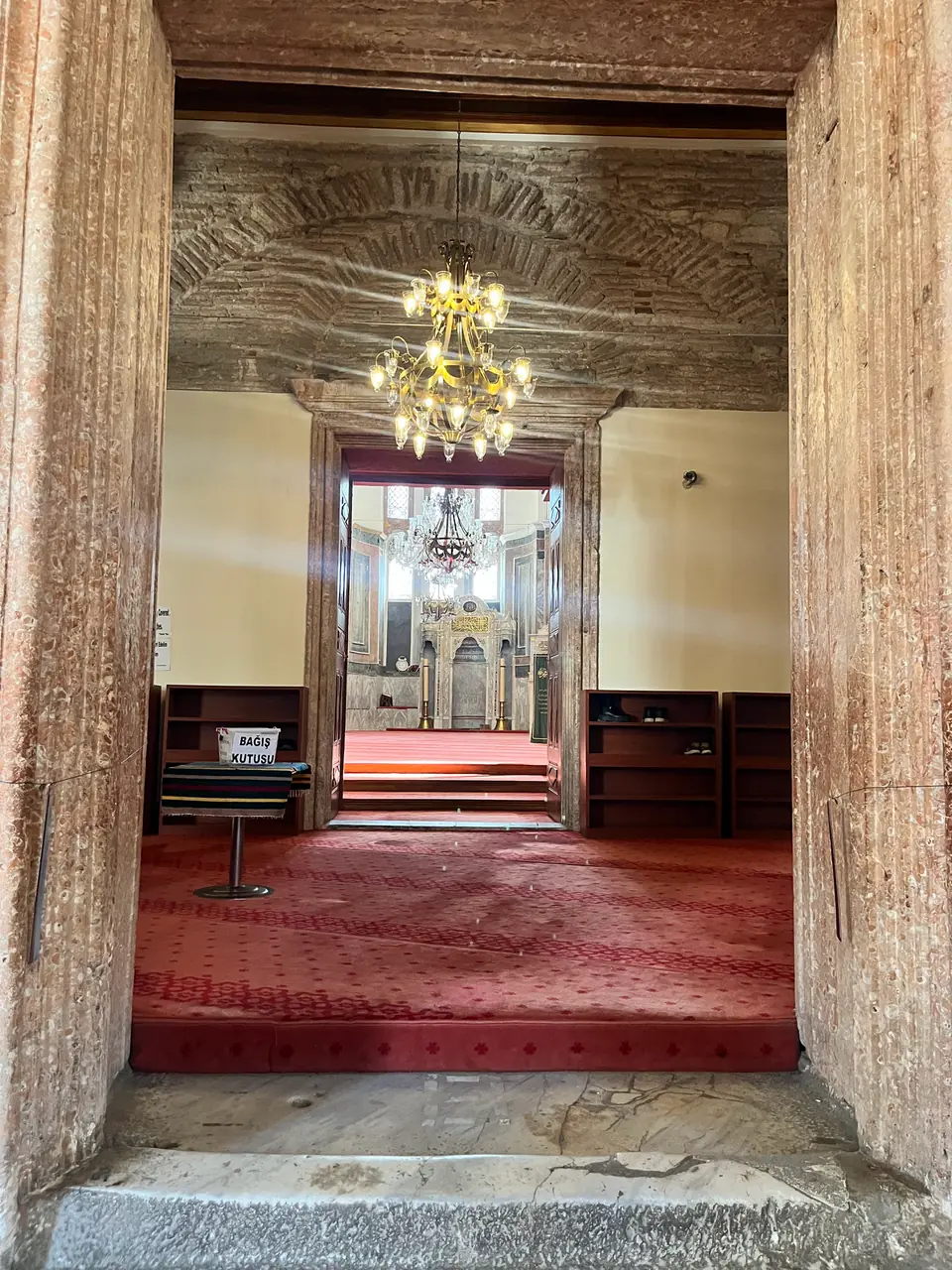
Zeyrek Mosque is the former Byzantine Monastery of Christ Pantokrator, after Hagia Sophia the largest surviving Byzantine religious building in Istanbul. The complex was built between 1118 and 1136 under Emperor John II Komnenos and his wife, Empress Irene, as a monastery comprising two churches, a funerary chapel for the Komnenos and Palaiologos dynasties, and a celebrated hospital (xenon). After the 1453 conquest, Mehmed II converted the building into a mosque; it took its name from Molla Zeyrek, a leading scholar of the period who taught at the madrasa established here. The Ottomans added a minaret, mihrab, and minbar while preserving the Byzantine core. The complex lies within the UNESCO World Heritage 'Historic Areas of Istanbul'.
Architecture
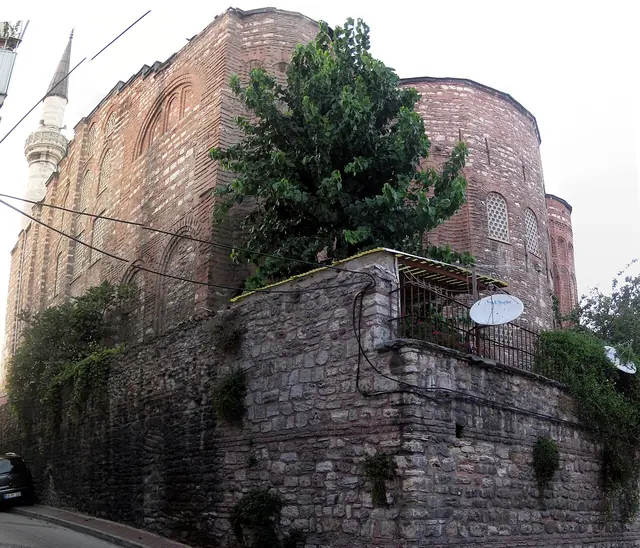
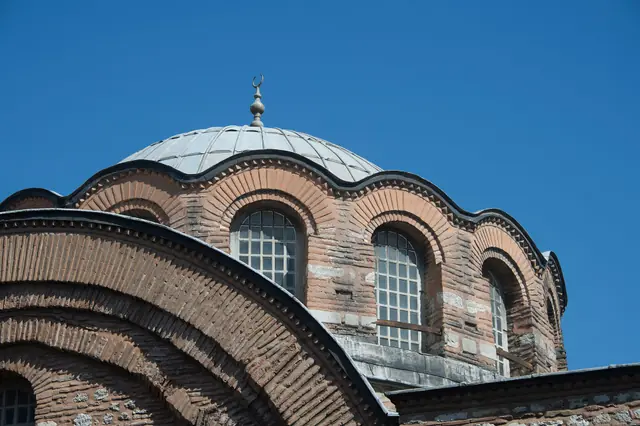
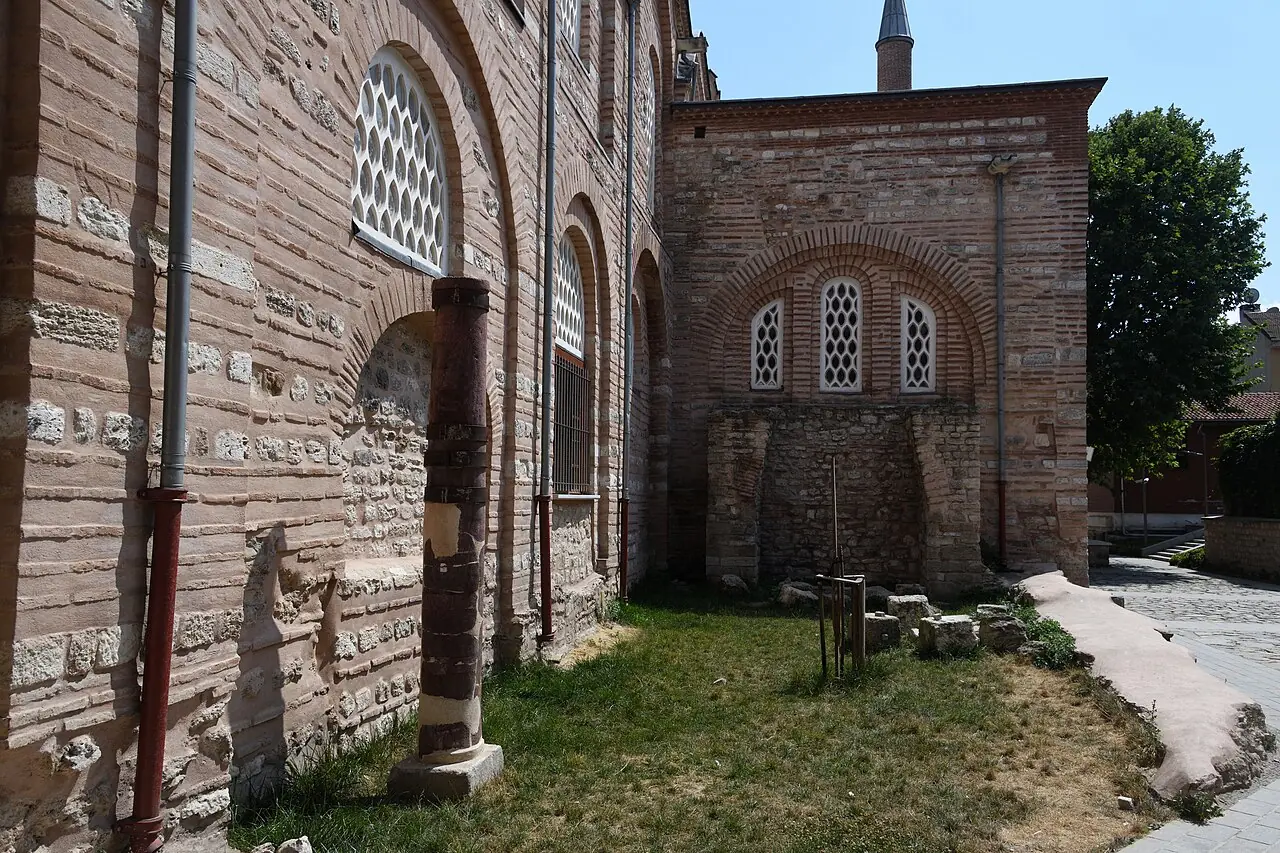
The ensemble consists of two cross-in-square churches (south and north) joined by a third, funerary chapel between them. Each church has a central dome, a narthex, and a tripartite sanctuary; the masonry is the characteristic Byzantine mix of brick and stone. The south church preserves a rare coloured-marble opus sectile floor and fragments of figural stained glass — among the oldest known. The building stands on the city's Fourth Hill, above a Byzantine cistern, its multi-domed silhouette dominating the slope down to the Golden Horn. A long-running restoration is gradually revealing the original Byzantine fabric beneath the Ottoman layers.
Photographs