Sinan / Classical
Takkeci İbrahim Ağa Mosque
1591–1592 · Zeytinburnu / Topkapı
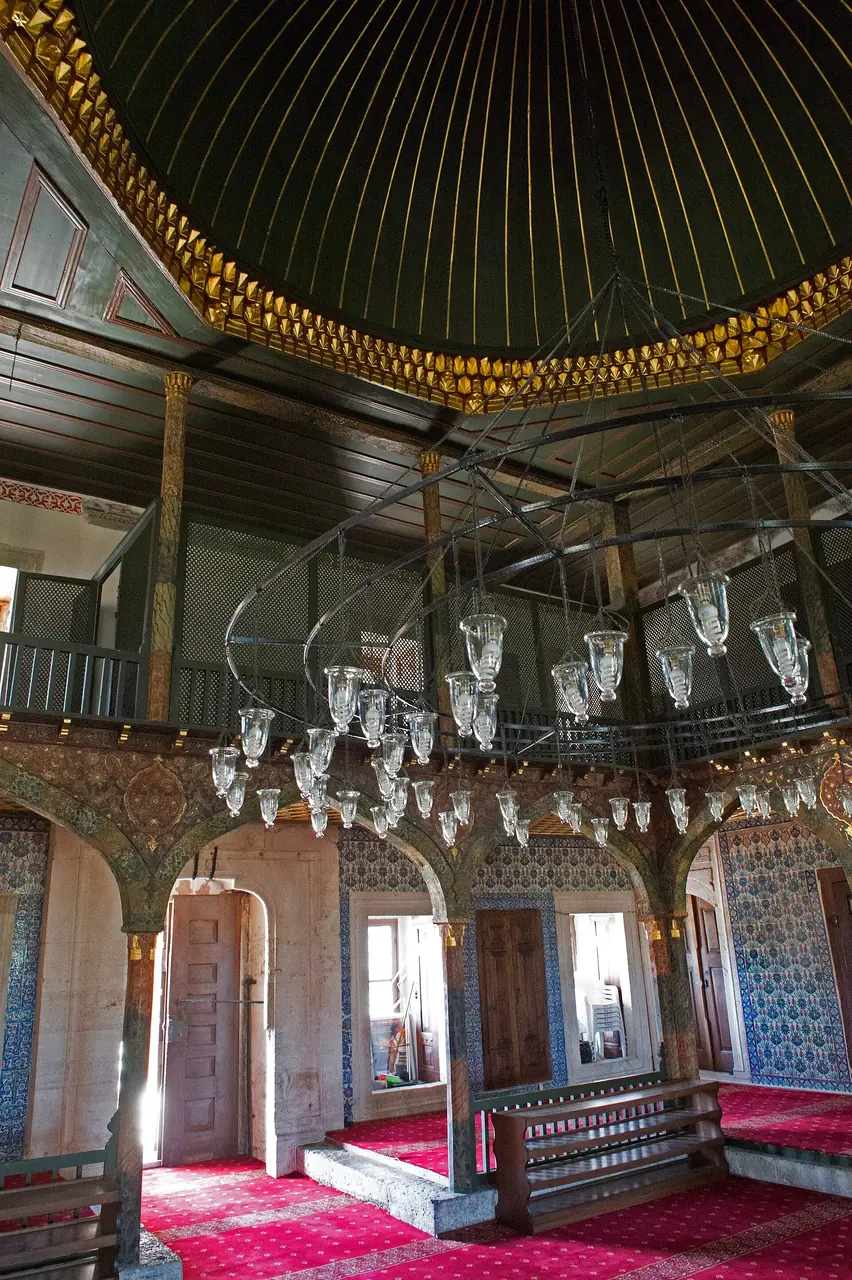
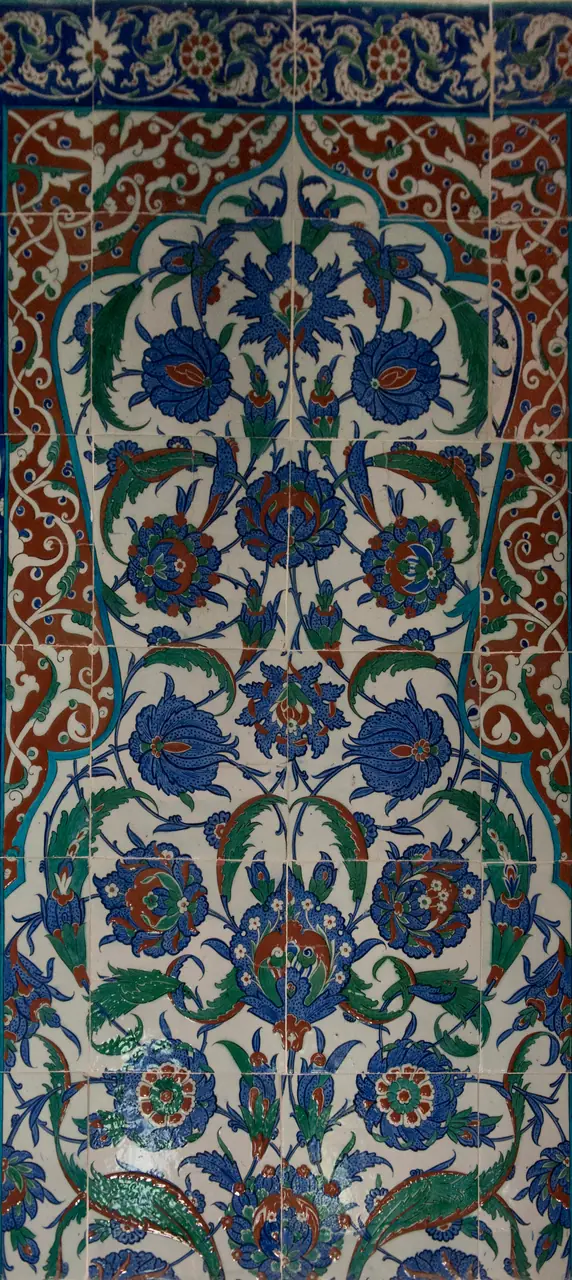
A cap-maker's mosque (1592): its wooden dome hides beneath the roof, unseen from outside, and its walls are clad up to the window arches in 16th-century Iznik tiles.
- Dome
- 5.5 m
- Minarets
- 1
- Built
- 1591–1592
- Architect
- Architect unknown
- Patron
- Takkeci İbrahim Ağa (Çavuş), a maker of felt caps (takke)
- District
- Zeytinburnu / Topkapı
History
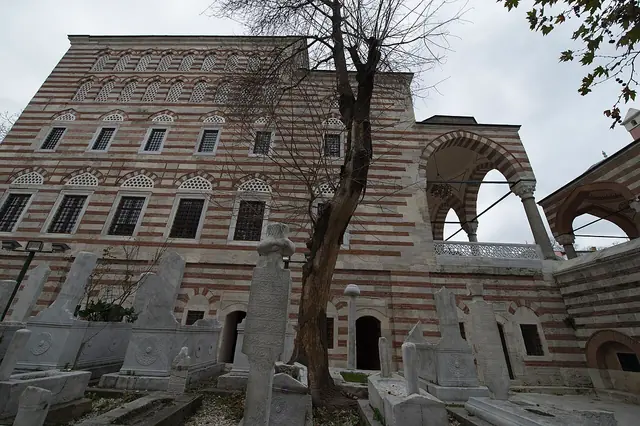
Takkeci İbrahim Ağa Mosque stands outside the city walls, by the Topkapı gate (Maltepe quarter, Zeytinburnu). It was founded in 1591–1592 by İbrahim Ağa, nicknamed 'Takkeci' — a maker of felt caps (takke), especially the tall conical kind worn by dervishes. Despite its humble artisan patron, the mosque is one of the most precious small monuments of the late Classical Ottoman period. Its walls are of stone and brick, while the dome over the prayer hall is of timber and hidden beneath the roof; the hall under it has kept its original character and 16th-century decoration.
Architecture
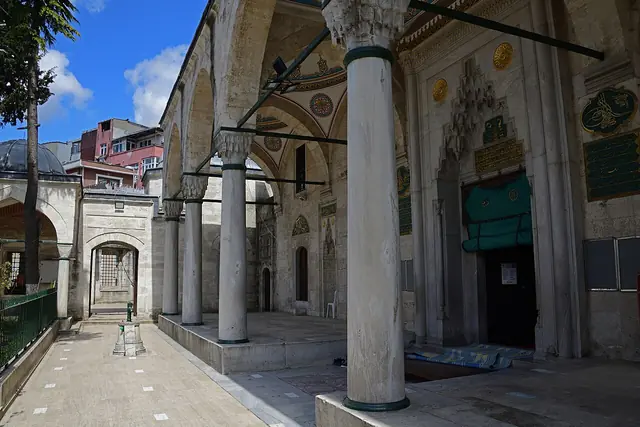
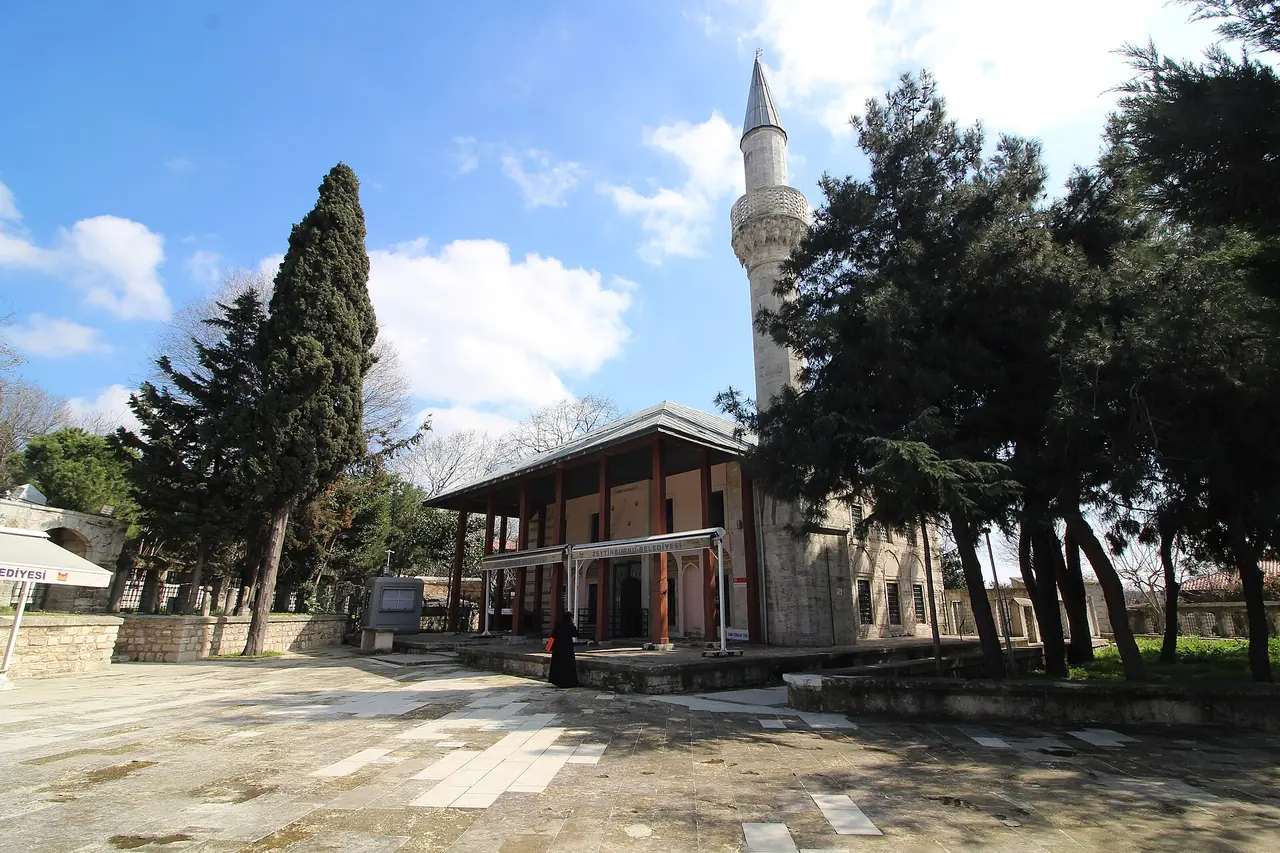
The building is rectangular in plan, with a wooden portico before the entrance and a roof ending in triangular gables at the front and sides. The prayer hall, about 11.7 × 11.25 m, is covered at its centre by a wooden dome of about 5.5 m on an octagonal drum, hidden beneath the roof and invisible from outside — a rare choice in Istanbul, where domes are usually of stone. The interior's chief treasure is its 16th-century Iznik tilework: panels of repeated or varied motifs clad the walls up to the tops of the window arches, nearly half of their surface. Produced with the refined underglaze technique of Iznik's golden age, the tiles give one of the best surviving impressions of how a classical mosque's tile décor looked. The combination of timber and tiles makes Takkeci rare among Istanbul's mosques.
Facts
- Its walls are clad up to the tops of the window arches — nearly half of their surface — in 16th-century Iznik tiles; some panels are now in Lisbon, at the Calouste Gulbenkian Museum. islamansiklopedisi.org.tr
Photographs