Sinan / Classical
Mesih Mehmed Pasha Mosque
1585–1586 · Fatih
Late-Sinan hexagonal-baldachin plan compressed to a small urban footprint, supported on a vaulted commercial substructure (shops below, prayer hall above) — an Ottoman 'income-generating mosque' design.
- Dome
- 12.8 m
- Minarets
- 1
- Built
- 1585–1586
- Architect
- Mimar Sinan
- Patron
- Mesih Mehmed Pasha, Grand Vizier under Murad III
- District
- Fatih
History
The Mesih Mehmed Pasha Mosque was built in 1585–1586 in the Fatih district of Istanbul for Mesih Mehmed Pasha, a grand vizier of Sultan Murad III. It is attributed to Mimar Sinan, though his personal involvement is qualified: in 1584 Sinan went on hajj to Mecca, and during his absence the royal architect Mehmed Subaşı stood in as acting mimarbaşı. The mosque therefore belongs to Sinan's very late output, built only three years before his death in 1588.
Architecture
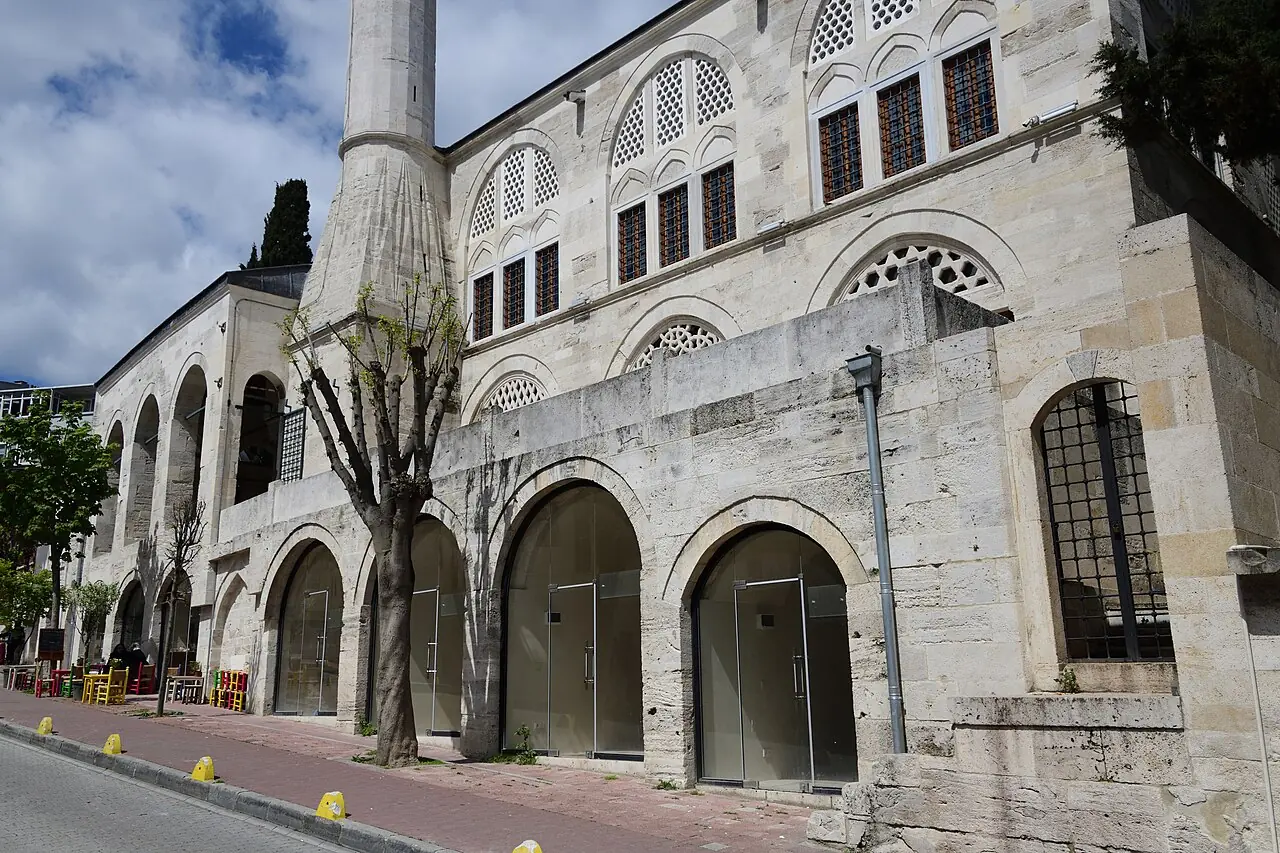
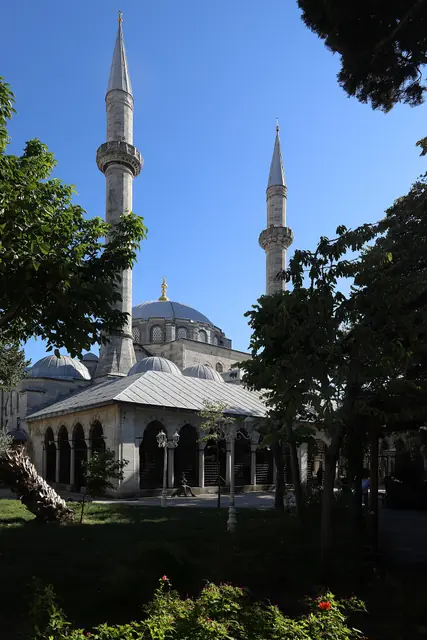
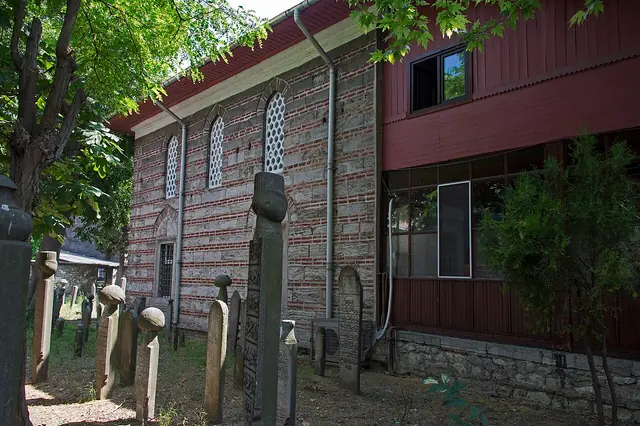
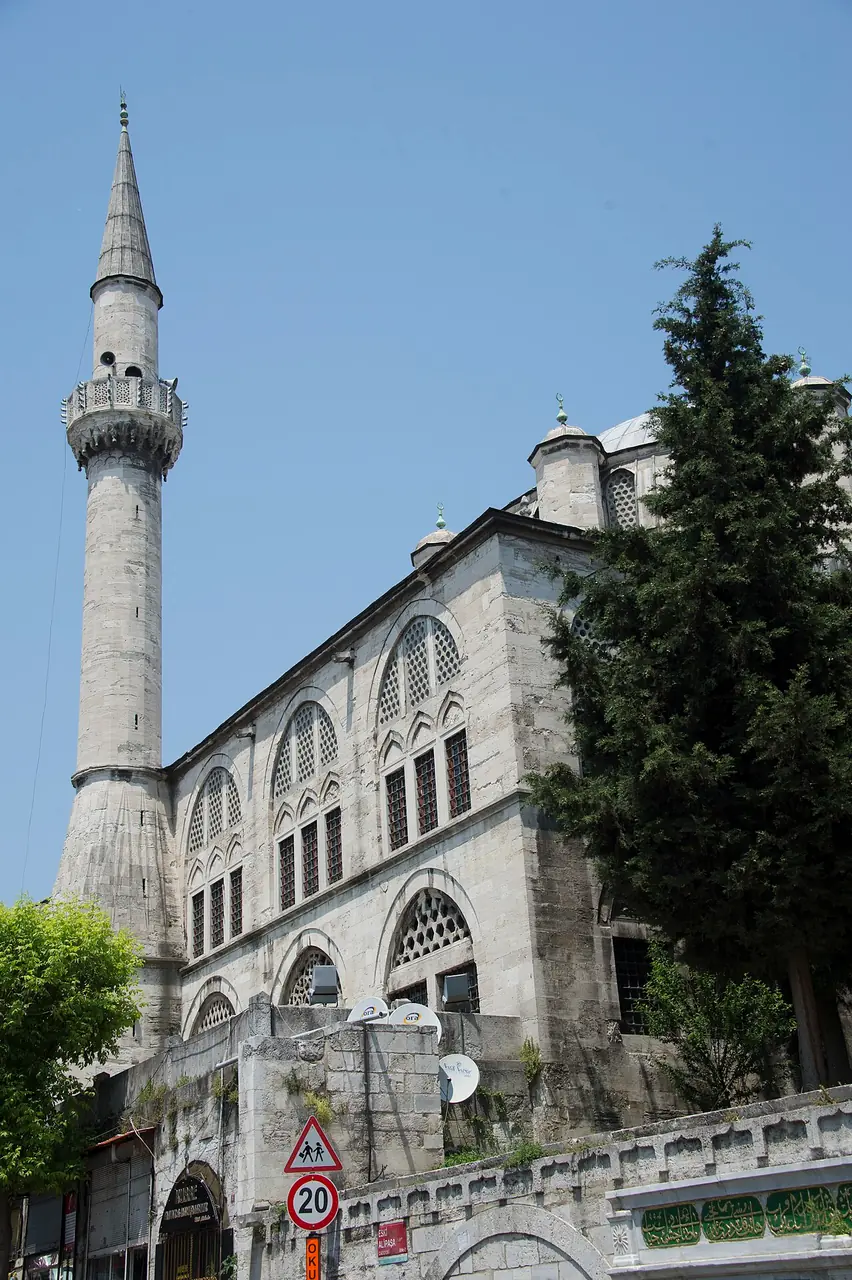
The mosque stands on a sloping site, with the eastern side noticeably higher than the western. To produce a level prayer floor, the western side rests on a vaulted substructure containing a row of shops — a commercial base intended to generate income for the waqf and maintain the complex. The north façade carries a double-tier portico of five arches; the inner colonnade supports five small domes. The lead-covered main dome has a diameter of 12.8 metres. The plan uses Sinan's mature hexagonal-baldachin scheme compressed to a compact scale. Daylight enters through a ring of drum windows and further window bands in the façades. Exteriors use characteristic Istanbul ashlar; the interior decoration is restrained.
In Sinan's evolution
Very late work (1585–86), built only 2–3 years before Sinan's death in 1588. Attribution partially qualified — Mehmed Subaşı was acting mimarbaşı during Sinan's 1584 hajj. A mature, compressed application of the hexagonal-baldachin scheme (first tried at Sinan Pasha, Beşiktaş, 1555) adapted to a difficult sloping urban site. Bridge between Sinan's canonical vocabulary and the transitional work of Davud Ağa.
Sinan Tree →Photographs