Late Ottoman / Baroque
Dolmabahçe Mosque (Bezmiâlem Valide Sultan)
1853–1855 · Beşiktaş / Kabataş
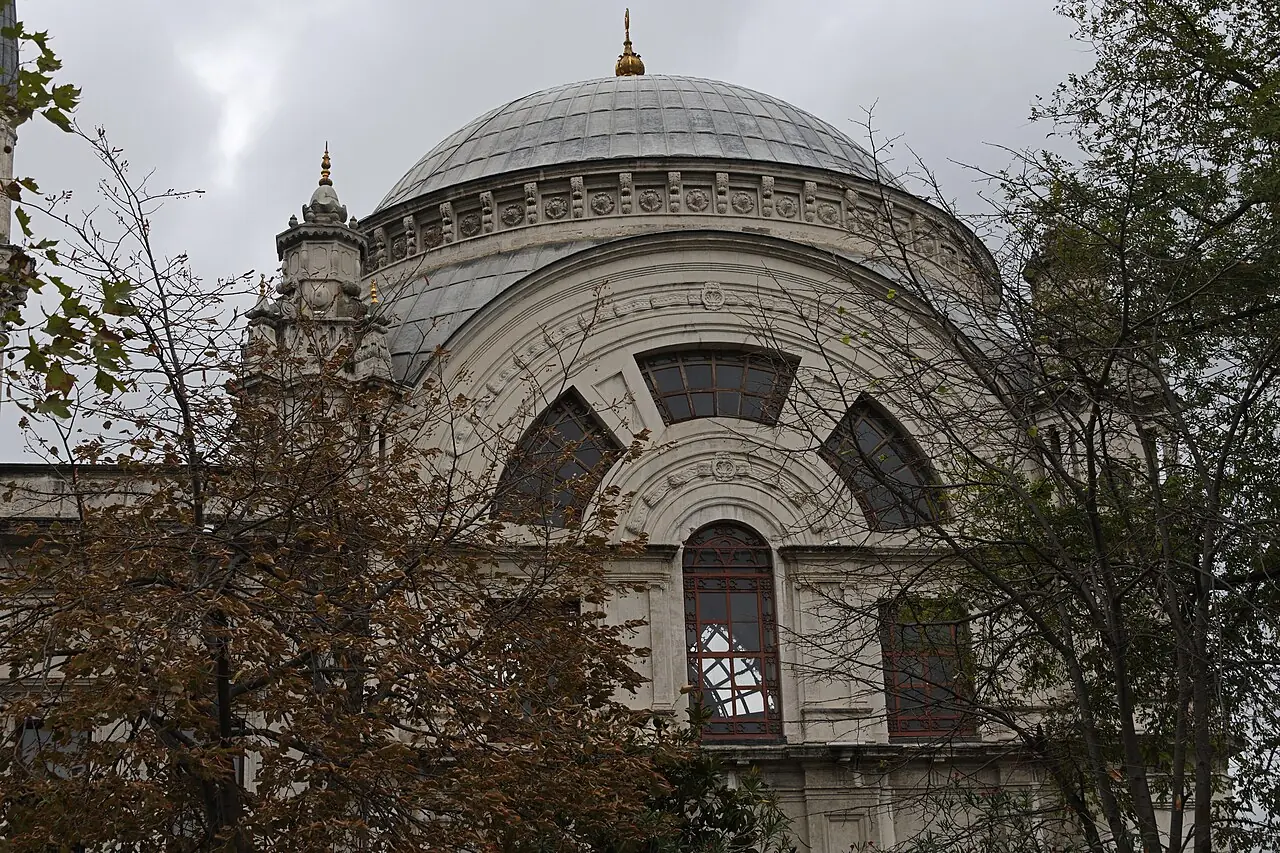
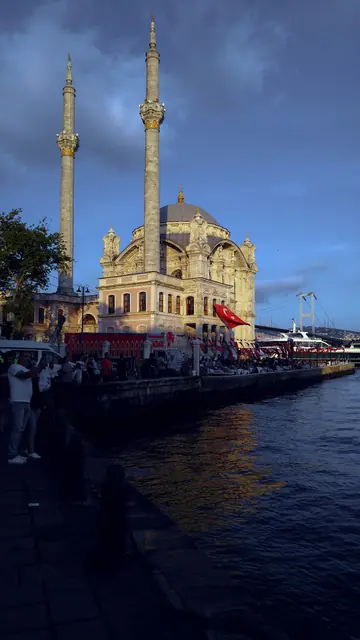
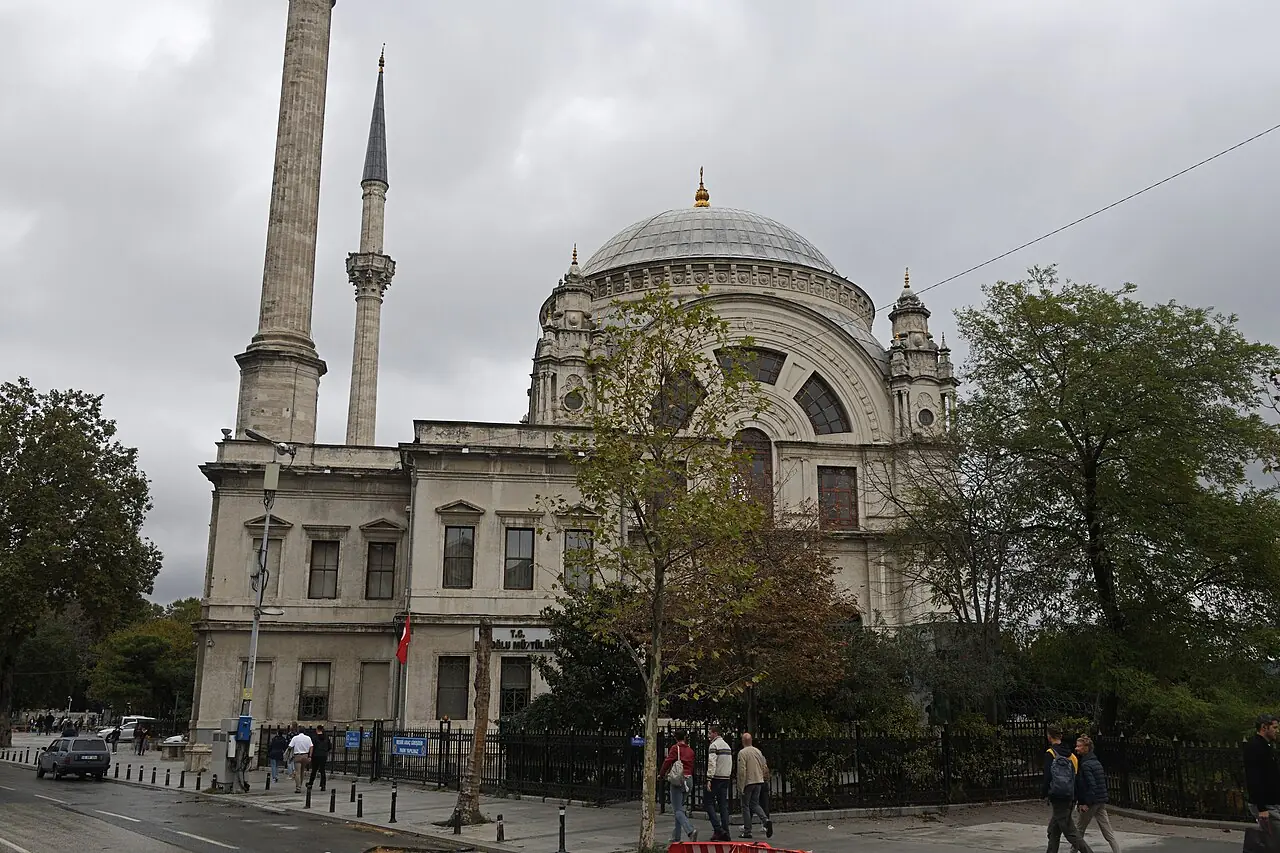
The Balyans’ baroque court mosque (1853–55) by Dolmabahçe Palace: huge arched windows flood the hall with light, with two slender minarets set into the corners.
- Minarets
- 2
- Built
- 1853–1855
- Architect
- Garabet Amira Balyan
- Patron
- Bezmiâlem Valide Sultan, mother of Sultan Abdülmecid I
- District
- Beşiktaş / Kabataş
History
The Dolmabahçe Mosque — officially the Bezmiâlem Valide Sultan Mosque — stands on the Bosphorus shore next to Dolmabahçe Palace. Its construction was begun in 1853 by Bezmiâlem Valide Sultan, mother of Sultan Abdülmecid I, but she died that same year before it was finished, and the sultan completed it; it opened for worship on 23 March 1855. The building served as the court mosque of Dolmabahçe Palace. From 1948 to 1961 it housed the Naval Museum; once the museum moved out, it reopened for prayer. The original courtyard and sebil were lost to a later road-widening.
Architecture
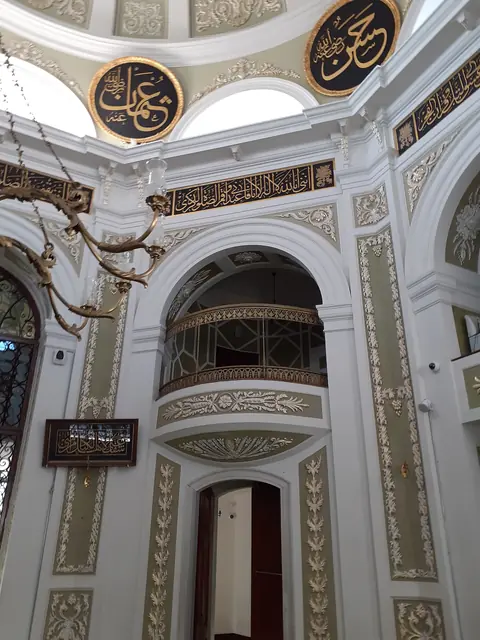
The mosque is an example of late-Ottoman Baroque with Empire features, the work of the Armenian court architects Garabet Amira Balyan and his son Nigoğayos, who also built the adjacent Dolmabahçe Palace. A single dome rises over the square prayer hall, which adjoins a lower royal (hünkâr) section. The façades are pierced by huge arched windows that flood the interior with light — its signature move. Two slender minarets, each 40.25 metres tall with a single balcony, are set into the corners of the building. The rich interior, with marble flooring, gilded symmetrical ornament, and calligraphy, links the mosque to the ceremonial architecture of the palace.
Photographs