Modern
Ali Kuşçu Mosque (Istanbul Airport)
2020 · Arnavutköy / İstanbul Havalimanı
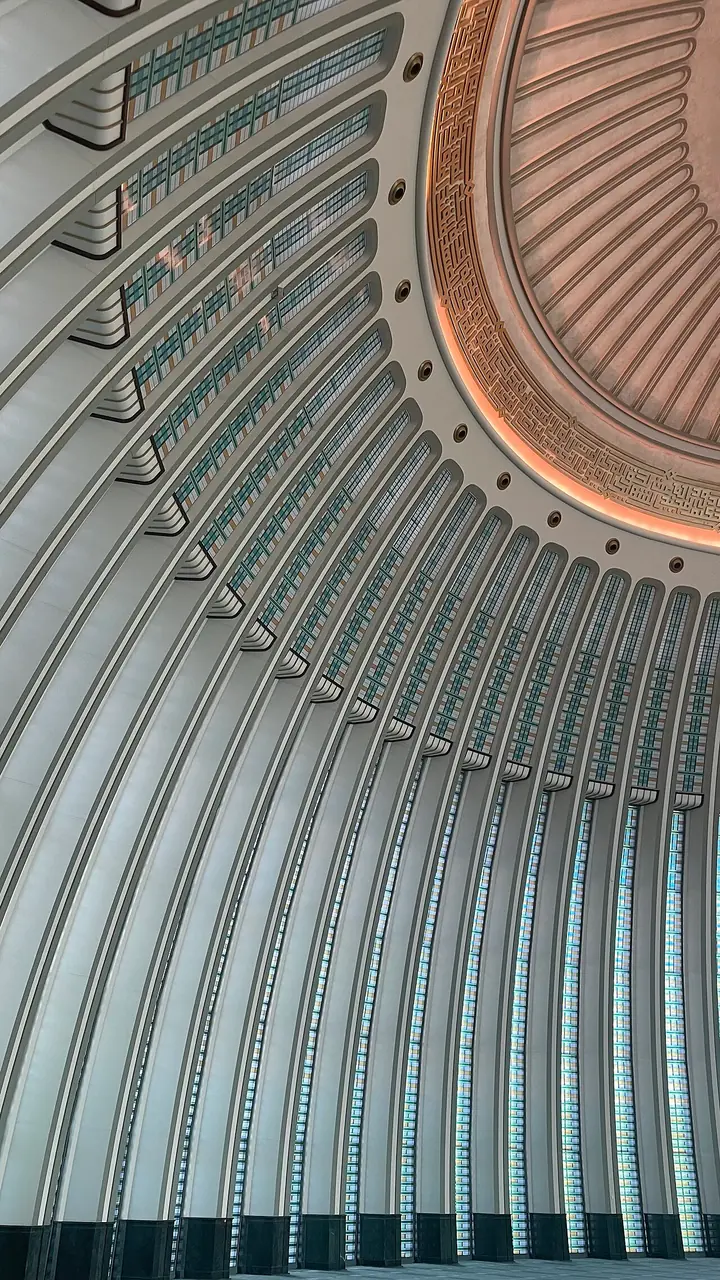
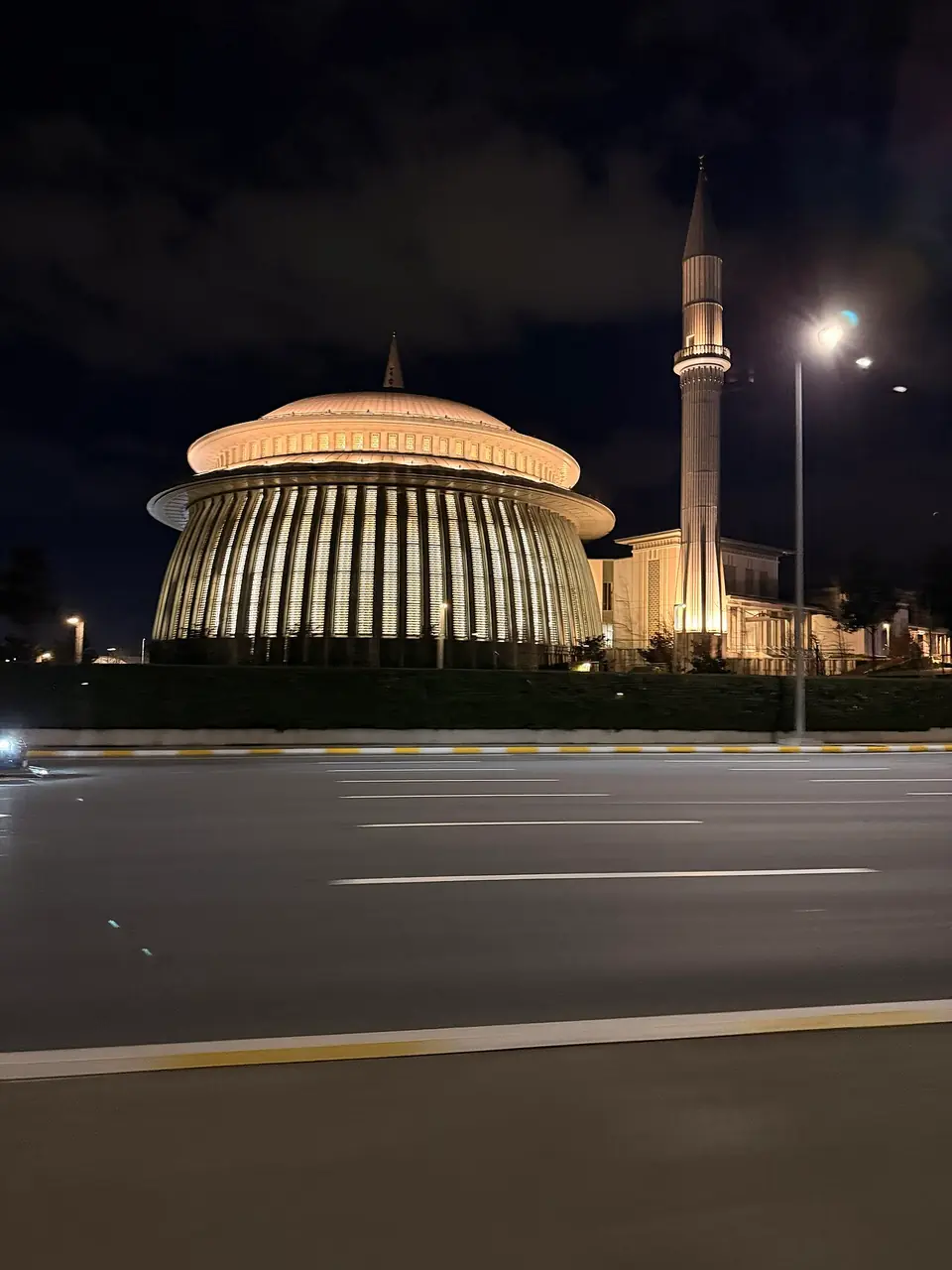
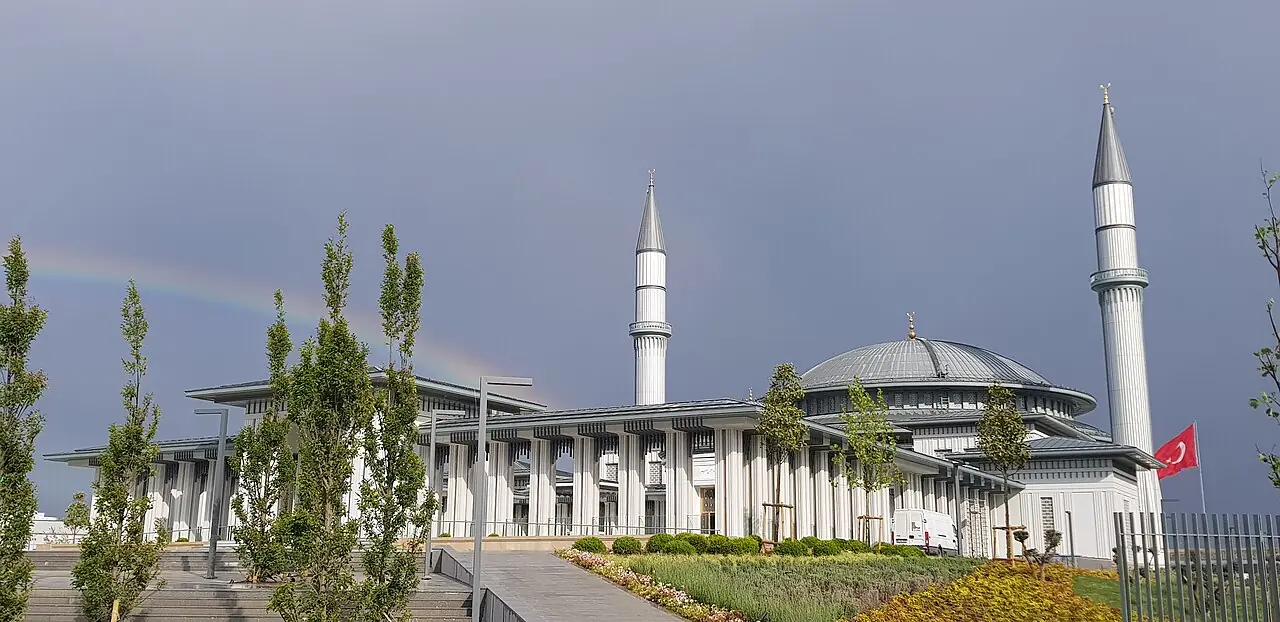
The mosque of the country's largest airport (2020): room for 6,230, and inside a fan of ribs between which 72 bands of coloured glass climb from floor to dome.
- Minarets
- 2
- Built
- 2020
- Architect
- Architect unknown
- Patron
- İGA, the Istanbul Airport operator
- District
- Arnavutköy / İstanbul Havalimanı
History
The mosque stands beside the terminal of Istanbul Airport in Arnavutköy, on the European edge of the city some forty kilometres from the historic peninsula. The airport opened in 2018 and its mosque on 14 June 2020; it was given its name on 8 February 2021. The name honours Ali Kuşçu (d. 1474), the astronomer and mathematician of Ulugh Beg's Samarkand school who moved to Istanbul after his patron's death and taught, at Mehmed the Conqueror's invitation, in the madrasa attached to Hagia Sophia. The choice is apt for an airport mosque: Ali Kuşçu worked on fixing geographical coordinates and time — the ground on which both navigation and the prayer timetable stand.
Architecture
The building is assembled from three parts — the domed hall, the mahfil gallery and the courtyard; the enclosed area is about eight thousand square metres, and with the courtyard the mosque takes 6,230 worshippers at once. Two minarets 55 m tall carry a single şerefe each. Inside, the dome rests on a fan of white ribs, and between them 72 bands of coloured glass climb from the floor to the apex — seen from outside after dark they turn the drum into a lit crown. A gilded band under the dome carries the ninety-nine names of God, the Sura al-Ikhlas is written at the crown, and fourteen different verses appear in the decoration altogether; the script is a lightly modernised Kufic. The carpets are turquoise. In 2021 the mosque received a LEED Gold certificate from the US Green Building Council.
Photographs